• Skip to primary navigation
  • Skip to main content

Adam Rafferty

Funky Fingerstyle Guitar

  • Home
  • Guitar Lessons
    • Free Christmas Tabs
  • My Book
  • Store
  • Tour
  • Blog
    • All Posts List
  • Podcast
    • All Episodes List
  • About
  • Contact
    • NEW – “Ask Adam” Voicemail
    • Booking Contact
    • Contact (email)
  • Get Your FREE Guitar Course
  • Show Search
Hide Search
You are here: Home / Archives for Jazz Education

Jazz Education

Les Paul’s Son Gene Gives Me a Guitar Lesson

By Adam Rafferty 13 Comments

Two days ago, I dropped a hard drive off at my mixing and mastering studio for my upcoming Michael Jackson Guitar CD. Time to mix & master…I start tomorrow!

The “engineer” is more than just an engineer. He’s the one and only Gene Paul – son of guitar and recording legend, Les Paul.

Gene played drums in Les Paul’s working band for years, and of course was privy to Les’ genius, since Les was his dad. Later on, Gene became a top notch enginieer…now he primarily does mastering.
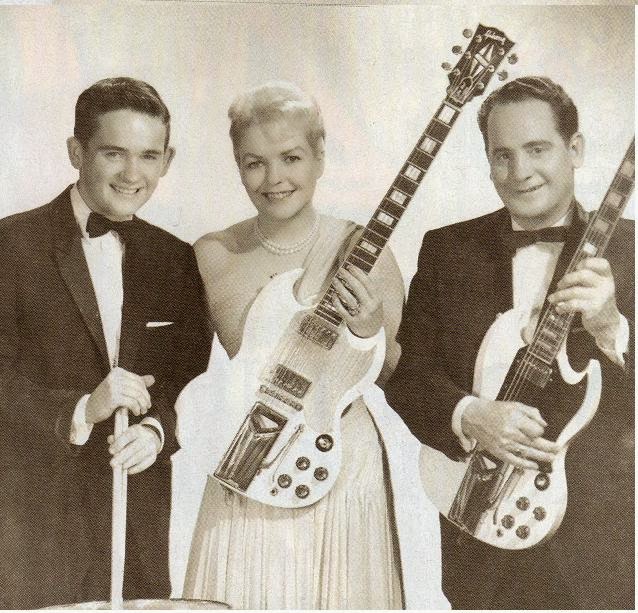
Gene Paul, Mary Ford and Les Paul

I was only there for about an hour, but I took a gander at the gold records on the wall. Does “Kiling Me Softly” by Roberta Flack ring a bell? Well, he was the engineer on the session. I’ll try to remember the others and post an update here…

As we chatted, he asked what I had been up to since the last CD. I told him: touring, practicing and perfecting the show and arrangements as best I can, so that I can provide a great night of enjoyable music for an audience.

Gene Paul in 2012
Gene Paul in 2012

That’s all he needed to hear, and my music lesson started. (I wish I had recorded him….I’ll see if I can get him to do an interview.) I sat with ears and eyes like sponges for soaking up his masterful words.

He went on to tell me stories of how his dad – every night – either audio taped or video taped his show, and then listened, and analyzed. He said that Les particularly paid attention to timing, the interaction with the audience…seeing what worked and what didn’t. It was all about the show.

Watch Les in action, how he communicates to the audience through the eyes, the music…watch what he does at the end. What a showman! So much is said with this simple tune…

At one point he told me Les got a Django record (yes record…LP…played with a needle) and worked on a Django lick for days. Suddenly, on the gig Gene heard this lick fuse into his Dad’s playing and asked him about it. Les would say “It was Djangos, but now it’s mine…”

A week between gigs? No problem…Les would take other gigs, even if they just covered hotels (between good paying gigs) just to keep the band and stage show razor sharp.

The point being that well into a ripe old age, Les Paul never stopped learning, studying, practicing, analyzing.

This should serve as inspiration to us all! It never ends…and if you ever saw the youthful life in Les’s eyes (I got to play with him when he was well into his 90’s and did see it – watch that video if you haven’t) you’d know…that youthfulness was surely due to an inquisitive, active and intelligent mind!

Ok. Time to stop blogging and start picking…Happy Monday!
Musicians – Please Stop “Making It Big”

By Adam Rafferty 19 Comments

My buddy Jefferson Thomas got a hilarious text message from a singer the other day about a bass players availability for a gig. It read:

“Is he available for a gig, or is he trying to ‘make it'”.

We had a good laugh, and let’s not forget – all humor has some truth in it!

=-=-

A letter to all musicians.

We will always play music because we love it.

However in the process of us who are trying to “have a career”, “make it”, book gigs, make a living and all be the top dog, I urge everyone to take a time out.

We must realize that we are constantly being forcefed “celebrity” – America’s drug of choice (according to Chuck D of Public Enemy), and we are affected by it collectively. It’s easy to forget why we love playing music and turn the simplicity of a song into a house of mirrors.

Everything has become the web presence, the shows, the gigs, the tours, the photos, the twitter, the hits on youtube, to many of us.

It’s all very nice when these things support the music, but when it becomes more important than the music, which we have let it – all of life becomes tainted with the “never having enough”.

The sickness of the music community (and all of showbiz) wanting “something for nothing” is running rampant. Shows like American Idol and overnight internet sensations cloud worthwhile artists from public view – but worse…they spread an MTD (mentally transmitted disease) of “making it”.

Now audiences too can feel the addiction of “wow I can be a celebrity too”. When they see the average, mediocre talent that is on display it is in reach for them. A baby can sing “Hey Jude” and be a star.

It used to be that audiences appreciated seeing someone do something that they COULDN’T do.

Imagine if everyone stopped trying to “make it”.

Imagine if YOU stopped trying to “make it”. Might you not be happier? How much will actually change?

None of the people who are “making it” are fooling me. Their being flashed before my eyes is like a temporary newspaper headline.

I call on you, dear musician, to abandon “making it big”. Just do what you do, let the profundity speak for itself with its own quiet voice. Carry on and live from the heart.

=-=-=-

Why do I write this? To give value to the music community in some kind of way. To orient students and aspiring pros in a direction that will blossom.

In hindsight, the only thing that has ever done my “career” any good was being 100% into the music and feeling the natural joy that comes from that. Everything else has NOT worked…and believe me, I have tried!

🙂

Good Luck, and groove on!

Surviving the “Ouch!” of Criticism

By Adam Rafferty 2 Comments

I remember as a kid getting “conduct” grades at my little private school run by nuns. We actually got grades in:

  • Works well with others
  • Homework – Complete, Prompt, Neat Independent
  • Accepts Criticism Well
  • General Conduct

Good grief. Item # 3 on that list…I wonder how many of my teachers accepted criticism well! I still don’t always, but I try.

Jack Canfield in one of his talks describes the mistake in ignoring criticism.

He does a mock performance with his attendees explaining that his goal is over “there” (he points somewhere in the room) and then asks for their “constructive criticism” in getting there – to his goal.

Comically, he puts his fingers in his ears and walks away from the goal. Everyone in the audience shouts, but he keeps going further and further away because he refuses to listen to them.

Everyone gets a good laugh, and he illustrates the importance of listening to criticism very well.

Criticism is a “pinprick” type of pain. It hurts, but the sooner we are honest with ourselves (and if we trust our critique) we can take what we do to the next level. Part of this is getting over the ego identification with what we do. What we do is not who we are.

Know that it should and will hurt, and know that it is probably your ego. It’s not that you’re bad, or a failure – it’s just that nobody knows it all, not you , I or anyone – and outside guidance is good.

If we can get over the ego bruise and get on with the message contained in the critique and take action, that’s called growth, and I repeat, it is good.

How To Practice Guitar If You Have Just an Hour A Day

By Adam Rafferty 7 Comments

How To Practice Guitar If You Have Just an Hour A Day

What if you have work, family or school commitments and have just an hour a day to practice guitar?

I’d like to help you out if you feel that you have limited practice time. Not everyone is a pro player and can spend several hours every day playing guitar.

Here are some tips. Let’s say you have just an hour. What’s the best plan of attack?

Don’t skip days

Even if you have an hour, don’t skip days. Do it every day even just a little. You’ll be much better off! You need to keep the mind focused from day to day.

=-=-=-=

Pre Practice Session – Have a plan. What will you work on? There are many areas on which you can focus – so choose ahead of time.

I always define what I will work on before picking my instrument up.

For example, you could practice…

a passage in a new piece or arrangementtechniquerunning old repertoireputting together a new arrangement

Part 1Start with a short warm up no matter what. See my groove scales lesson. Once mastered this takes 5-10 minutes.

Video and PDF Download – Click Here

Part 2

Decide clearly on what you will work on for the session, maybe even for the week!

Let’s say you are working on arrangement. Maybe there are some spots where you make mistakes and they are in need of fixing.

Practice SLOWLY

We’ve heard it a million times, but this is golden. I do this! It’s like a deep cleaning up of loose ends. Magically when you pick up the tempo, the music will mesh like gears if you have practiced slowly enough.

Take lots of breaks

Practice short passages in chunks. 15 – 20 minutes max. The mind learns fastest doing it this way, and it’s good for you physically too!Don’t Practice Mistakes, Practice What Works!

Important! Change your fingerings until you get something easy where you almost can never make a mistake. It’s like figuring out a puzzle.

You may need to try a few things to discover what feels right to you.

I can’t tell you how many times as a young guy, I tried to play someone else’s uncomfortable fingerings and always made mistakes, yet tried to force it.

Classical guitarist John Williams once said he finds the most comfortable fingering that he doesn’t screw up, and sticks to it. I do the same!

The Mind Needs Repetition to Learn

Once you find the fingering, it will take repeated practice to drive it down into the subconscious. All too often we think we know a piece but it falls apart when we get nervous. No sweat, just practice it more! 🙂

Remember – take breaks even when practicing a repetitive thing.

Part 3

Mental attitude. Even if after a practice session you can’t play the piece, fear not. Pros know to NOT look for immediate results, and to just put the time in.

It’s like punching your time card at work.

Come back the next day, practice the same piece, again and again. In a week, 2 weeks – you will start to see results.

DO NOT try to practice several different things in a short practice session, and don’t switch every day to a new thing. You will only skim the surface of everything.

Focus in a relaxed way, even if you have limited time. LIke a magnifying glass harnessing the suns rays to burn a small hole in a leaf, you will surely accomplish what you set out to do.

I hope this helps you out!!! Now, get to work 🙂

– Adam

What is Your Ideal Listener Profile?

By Adam Rafferty 7 Comments

Disclaimer:  This is in no way intended to step on anyone’s toes.  I love all styles of music.  This blog post is about musicians awareness of “giving value” to their listeners, regardless of style or instrument.

=-=-=-=-=-=-

In case you don’t know it.  I was a stone cold, bebopping, jazz guitar player with a big old archtop guitar, running around NYC and playing every show, rehearsal and session I could get to.

It was a hectic and underpaid life for many reasons . But now I am happier and more successful now than every before .  I will delve into the shift that changed my life, in this post.

I switched to fingerstyle guitar for many reasons.  I felt the urge to entertain people, first and foremost.  Entertaining gives me more joy than anything.  The entire shift was brought about by asking myself “for whom am I playing?

My life changed…I stopped caring what other musicians thought, and started caring what the audience thought.

These days I see many musicians play and not “keep the audiences attention” for various reasons.  The musicians are usually  beyond excellent, so what’s the problem here?

I have a question for you . Are people talking through your gig?  Are you holding their attention?

In no way am I suggesting that you or anyone change what they are  doing to what I do.  I am however encouraging you and other musicians to ask themselves why they are doing what they do.

The question each musician must answer – with utter honesty is “For whom am I playing?  Who is my ideal listener?  Who am I trying to impress? What is my ultimate musical goal?”

Our sense of survival is our deepest fear and psychological button.  Back before jazz schools a MUSICIANS SURVIVAL was based on entertaining.

Fortunately, I was in many bands with leaders who came up in the era of entertainment being a MUST, and if I did not rise to the occasion, I lost my gig and did not eat.

I can remember in Harlem a band leader threatening me to stop practicing and entertain the “room” or else I’d be fired. GULP!  And I remember bored faces of bar patrons “light up” when I stopped playing a million notes and started playing the blues.

That is called a FIRE under the ASS, as it were.  ‘Scuse my French.

If you are trying to impress:

– Other musicians
– Teachers
– Yourself, to see how you stack up
– Other musicians on the internet, Youtube, etc

That means….YOU BLEW IT!  You forgot about the most important people – the PUBLIC.  Ok, that’s simply my opinion – but check it for yourself!

What’s really confusing though is that when you are in school, you feel like your SURVIVAL depends on the approval of peers and teachers….and impressing them becomes the goal.  That’s why music school has nothing to do with preparing you the real world environment of music.

Regular people, not musicians, are your main audience!!!!  Make this your mantra.

Regular people need to like what you do.  Regular people need to feel good when you play.

Take a Lesson from Marketers

Anyone marketing a product knows that they need their ICP – Ideal Customer Profile.  Well, think about your listener as if they were a customer.  Who is your listener?  What age, gender, financial bracket, etc are they?  How much of society do they make up?  Where do they hang out?  And so on….

The idea of whom one is playing music for  is so deeply ingrained in a musicians playing approach, it literally permeates EVERY note that a musician plays.  And if you’ve spent years playing for other musicians – everything regarding your tone, time touch and concept are over there.

It can feel downright weird to play music for the “audience” if you are in that other zone.  I can “hear” whom a musician is playing for as if they told me in plain English.

I am not talking about the musical skill. I am talking about the breath of life which permeates the musical thought, and intent behind the music.

I showed my girlfriend (who is not a musician) two jazz quartet videos – one old (1960’s) and one new (current) and she said “the new one – they all sound like they are playing their own thing and it is not matching up the way the old one does”.

No one could be further from understanding music than her – but  she did hear the main difference!!!!  Food for thought, kids.

So let’s close with the questions to ask yourself:

For whom am I playing?
Why am I playing music?
What is my ultimate goal in playing music?
Would I rather be “the best” or see “happiness” in my audience?

Write a full description of your ideal listener – sex, age, eductaion, financial bracket – whatever you want.  (This will tune you to thinking about THEM instead of YOU.)

What reaction do you want from them?  (Hint – joy is the right answer, thinking YOU are awesome is the wrong answer.)

In Conclusion

Be a giver, not a taker!  Wake up this way, go to sleep this way, practice music this way and talk this way.  Amen.

  • « Go to Previous Page
  • Go to page 1
  • Interim pages omitted …
  • Go to page 17
  • Go to page 18
  • Go to page 19
  • Go to page 20
  • Go to page 21
  • Interim pages omitted …
  • Go to page 27
  • Go to Next Page »
Learn my arrangements, get personal feedback and more. Try Study With Adam FREE for 14 days CLICK HERE

Adam Rafferty

Copyright © 2026 Adam Rafferty and Crescent Ridge Publishing | Email Policy | Privacy GDPR, & Cookies